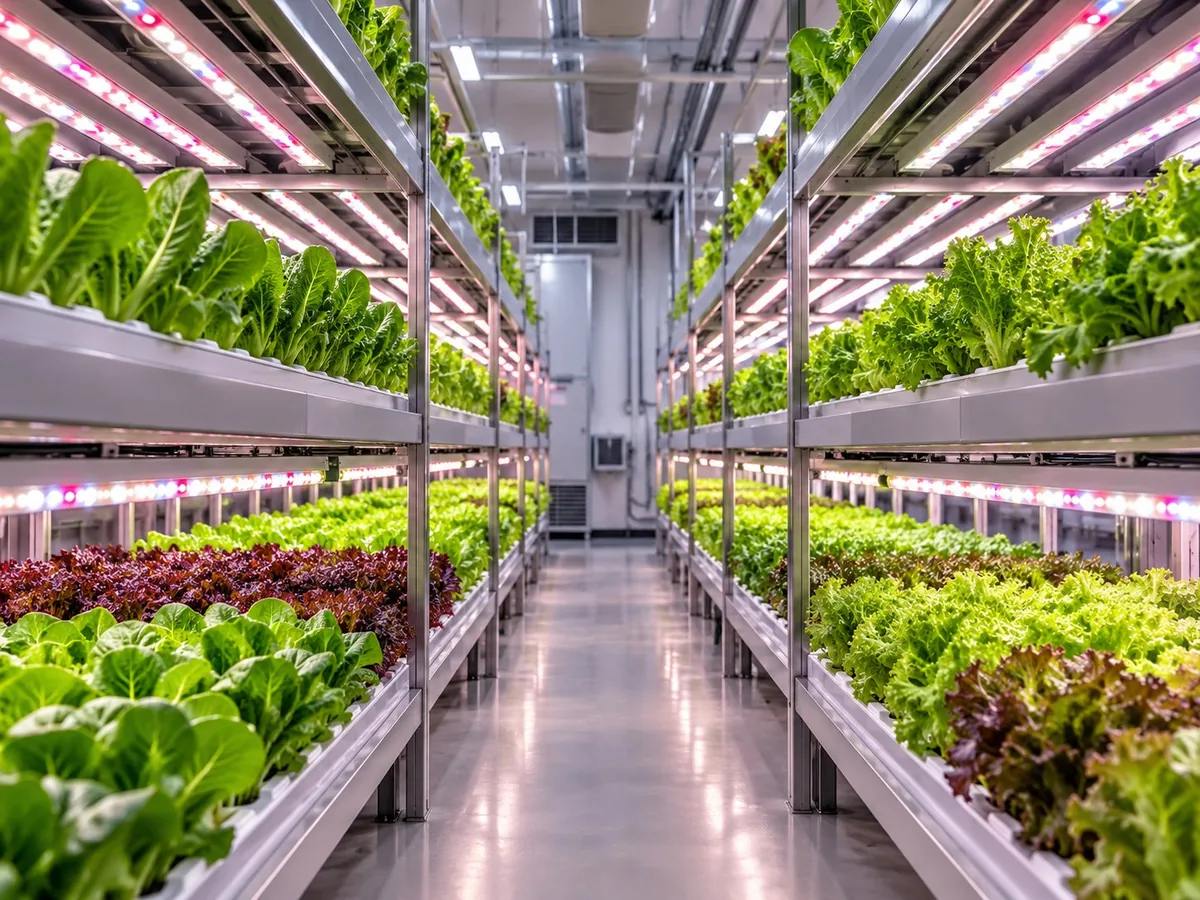
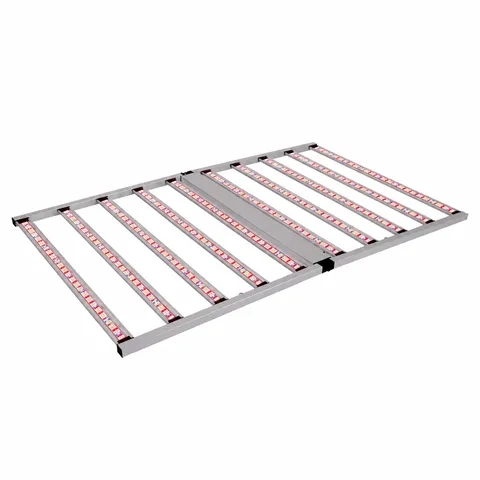
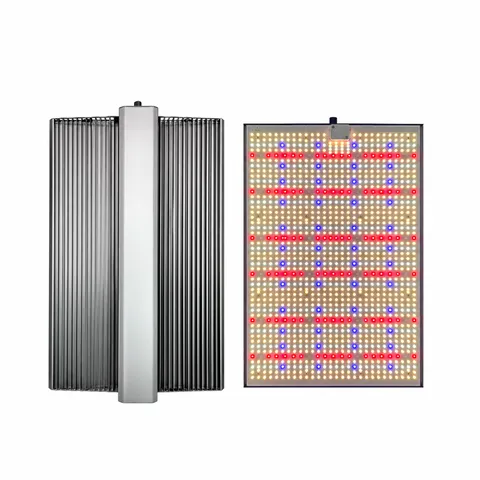
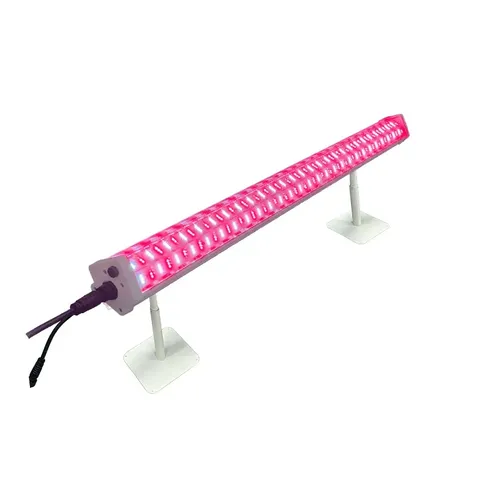
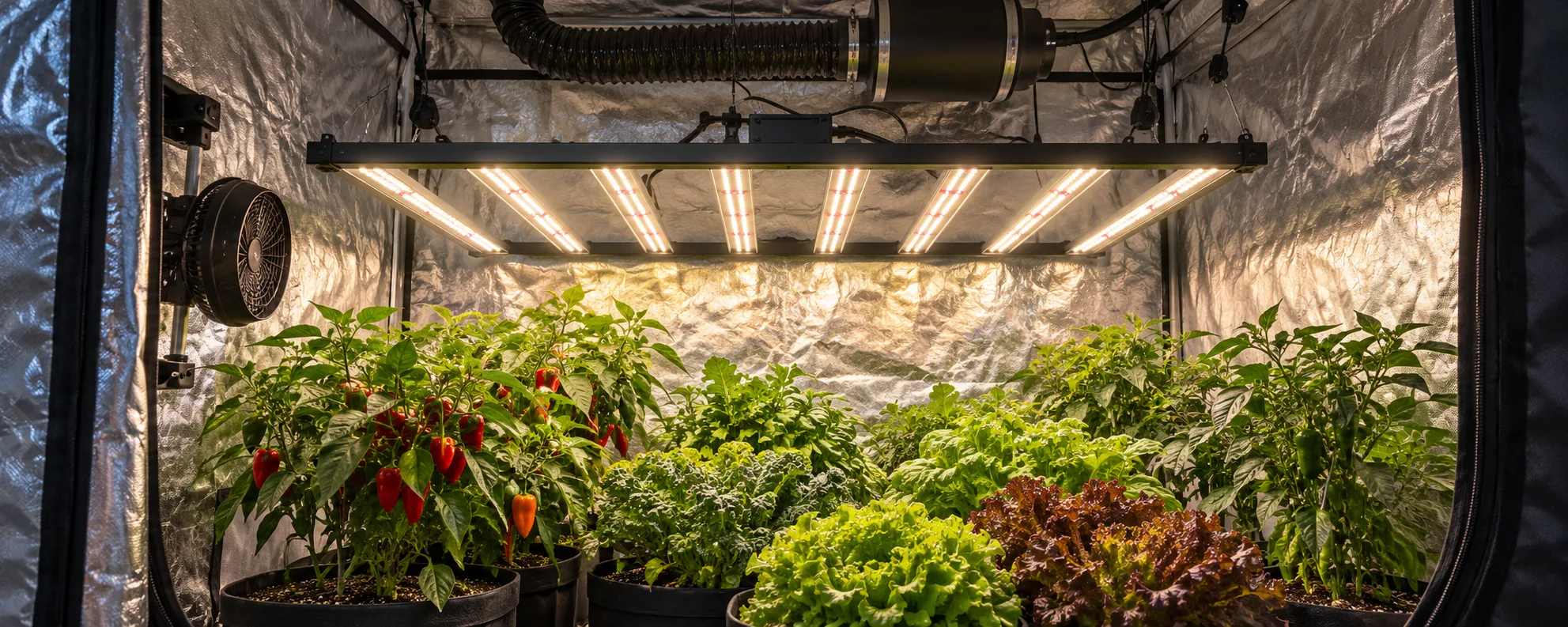
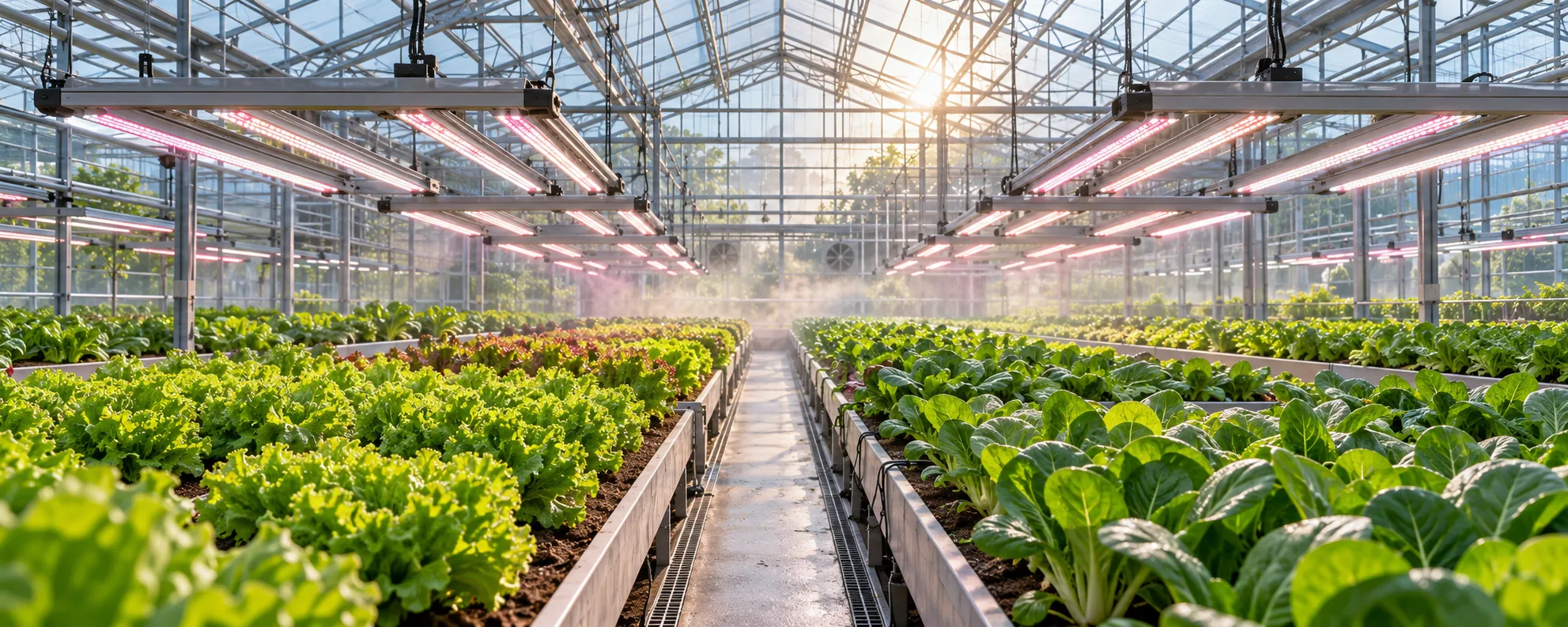
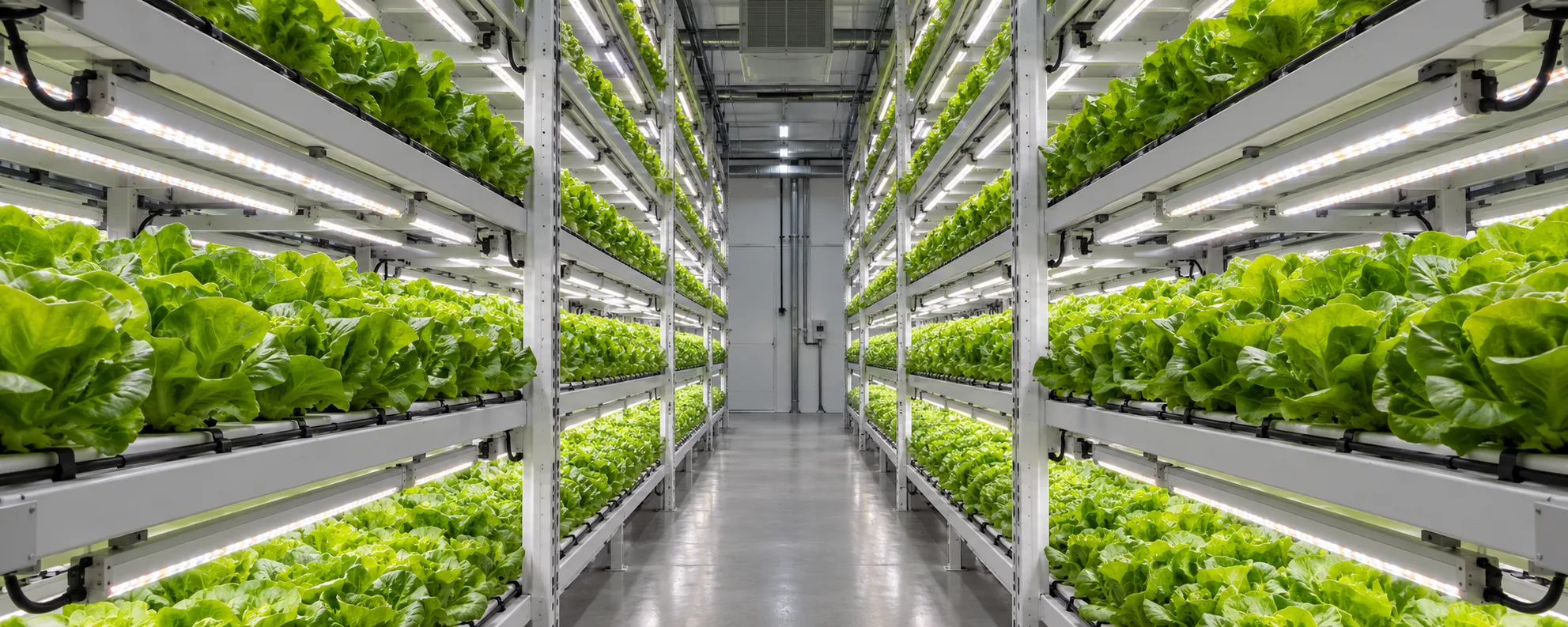
Illustrative image of a typical commercial indoor growing environment — not a customer installation photograph.
Technical focus on this page
DLI-led fixture sizing, uniformity and cost of delivered light
How this application works
What drives lighting decisions in commercial indoor growing
A sealed indoor room removes the two variables greenhouse growers rely on: daylight and season. That makes the lighting design fully deterministic, and it also makes every design error permanent. Once the fixtures are hung, spacing, mounting height and circuit layout fix the light distribution for years, and the electricity bill follows the installed load every single day.
The practical consequence is that the useful unit of comparison is not the fixture wattage but the delivered photons per unit of energy — PPF in µmol/s and PPE in µmol/J — combined with how evenly those photons land on the canopy. Two fixtures with the same wattage can differ by a third in PPF, and a layout with good average PPFD but poor uniformity can still produce uneven crops.
Efficacy also has a physical ceiling, which is useful when a supplier quotes a spectacular number. A published review of LED physics and fixture design put the practical limit at about 3.4 µmol/J for white-plus-red fixtures and 4.1 µmol/J for blue-plus-red, with both figures falling by roughly 10 % once optical protection for humid environments is added (Kusuma, Pattison & Bugbee 2020). A quoting sheet claiming substantially more than that is describing a measurement method, not a fixture.
The sequence below is the one this page walks through: set the crop and stage targets, convert them into a total PPF requirement, size the fixture count with a utilisation margin, verify uniformity at the planned mounting height, then check power density against HVAC capacity and utility budget.