
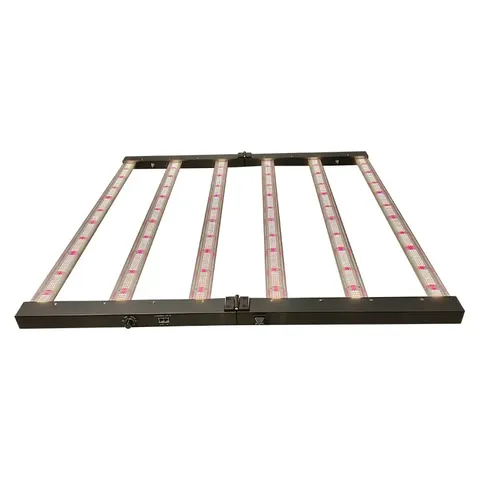
720W Foldable LED Bar Grow Light
Model STG-720W-F-01
- Power
- 720W
- IP rating
- IP54
- Dimming
- 0-10V knob dimming
Commercial Indoor Growing · Cannabis Cultivation
View DetailsProduct Center
Explore commercial LED grow lights for indoor cultivation, greenhouse supplemental lighting, vertical farming, propagation and specialized spectrum applications.
Manufacturing and OEM/ODM solutions for commercial growers, distributors and grow light brands.
Product Range
Six fixture families covering high-bay indoor rooms, compact spaces, greenhouse top lighting, multi-tier racks, lower canopy and specialized spectrum programs.
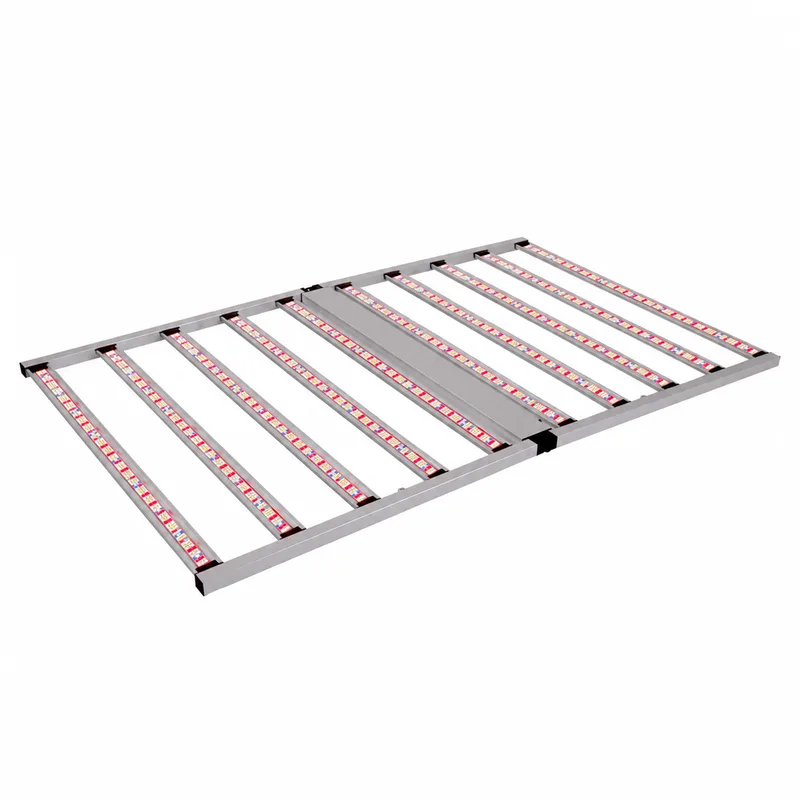
Commercial high-output lighting for indoor grow facilities.
Explore Products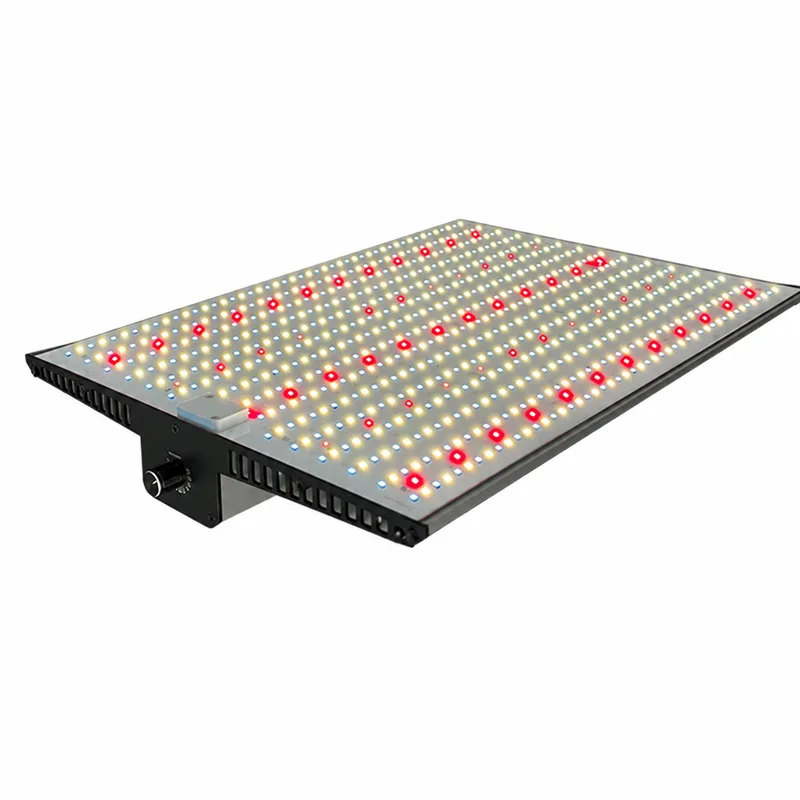
Compact and efficient full-spectrum lighting for indoor cultivation.
Explore Products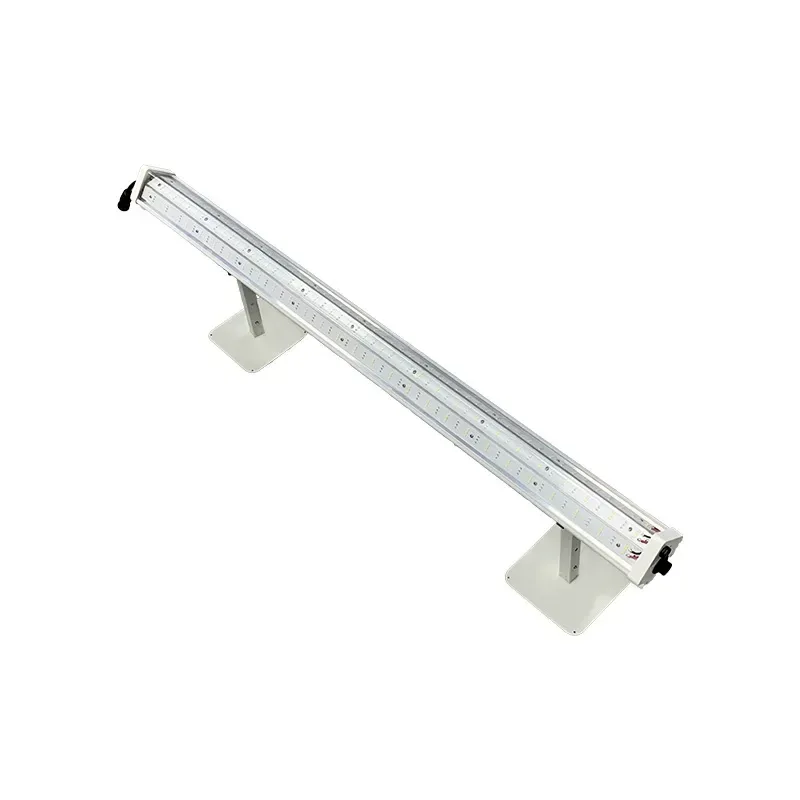
Supplemental canopy lighting for improved light distribution and lower plant development.
Explore Products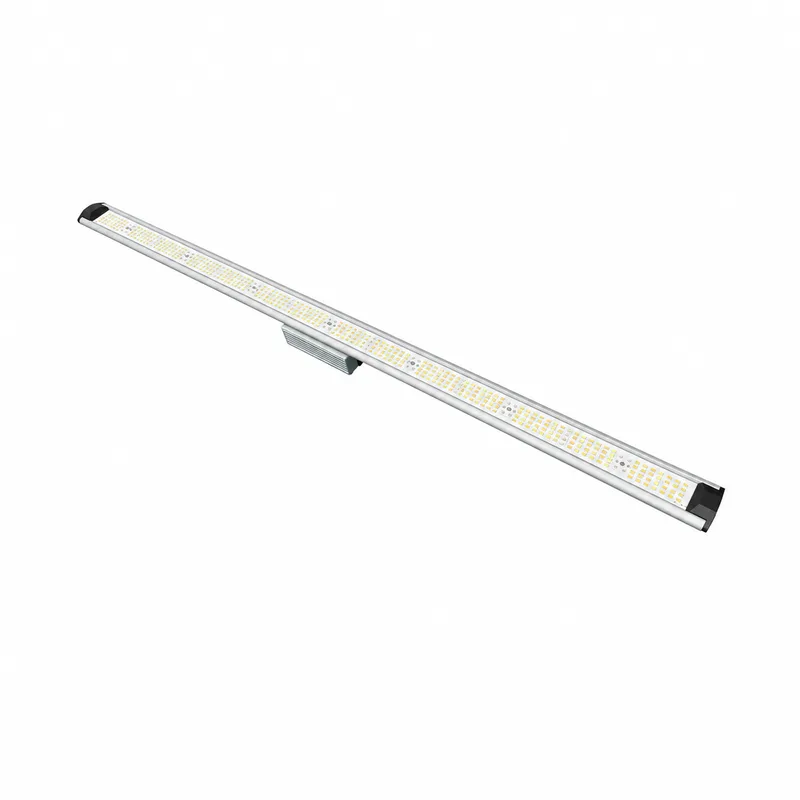
Low-profile lighting for seedlings, clones and multi-layer cultivation systems.
Explore Products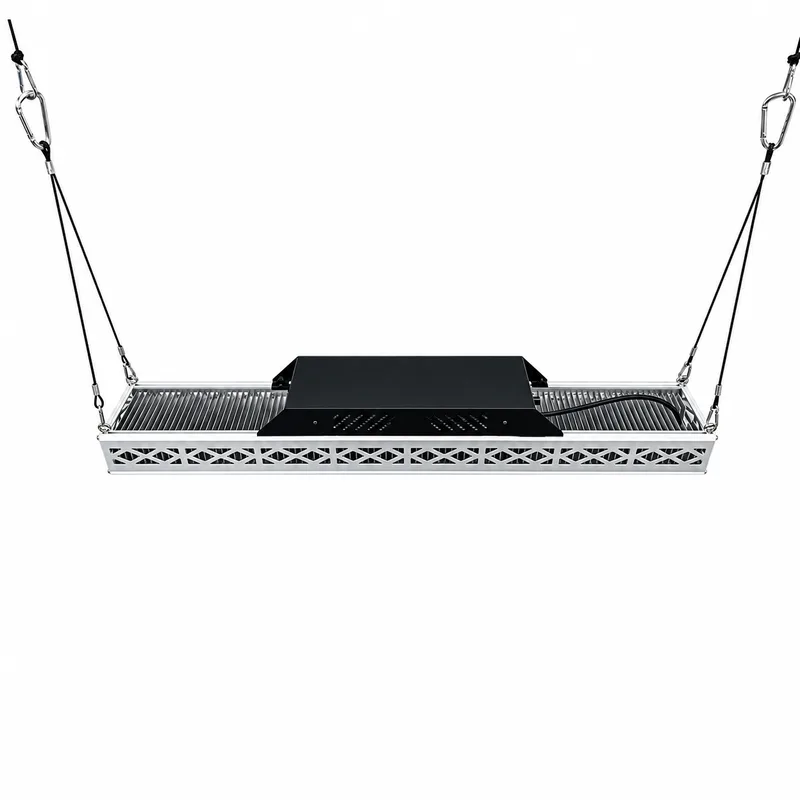
High-output overhead supplemental lighting for commercial greenhouse production.
Explore Products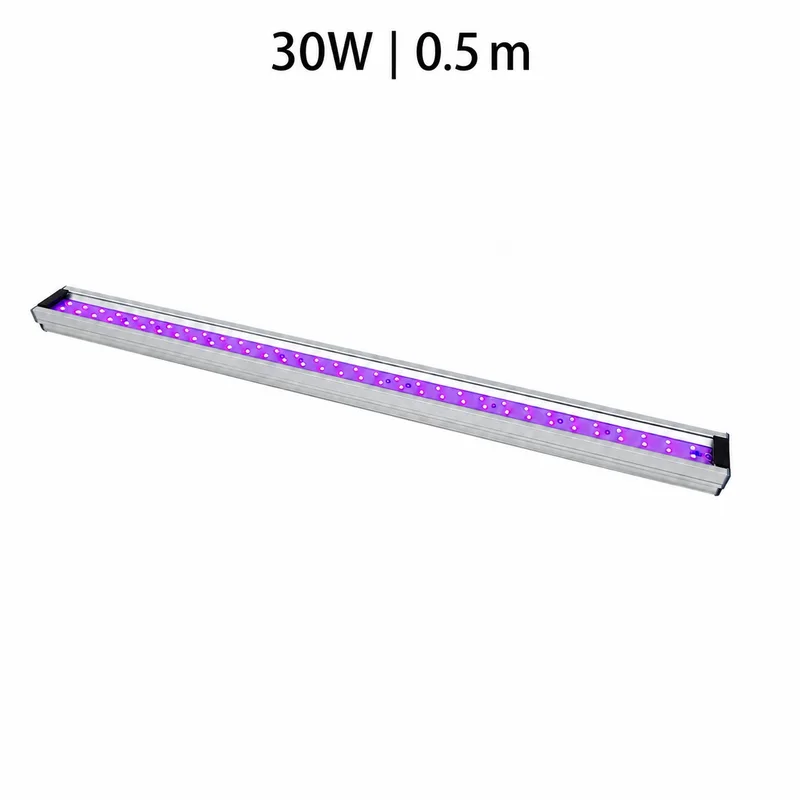
UV, far-red, deep-red and customized spectrum solutions for specialized cultivation strategies.
Explore ProductsSelected Models
Explore selected grow light models for commercial cultivation and professional horticultural applications.
Model STG-720W-F-01
Commercial Indoor Growing · Cannabis Cultivation
View Details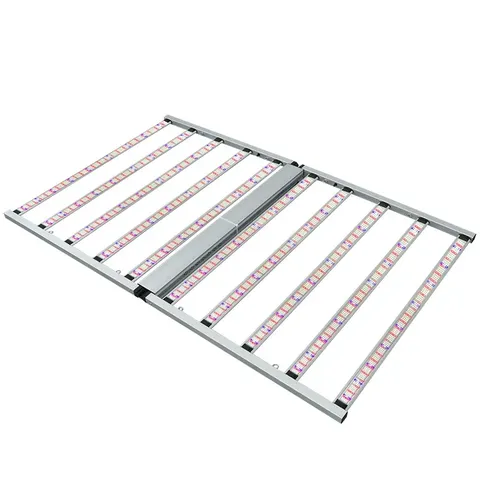
Model AD10-1000-2C2-180
Commercial Indoor Growing · Cannabis Cultivation
View Details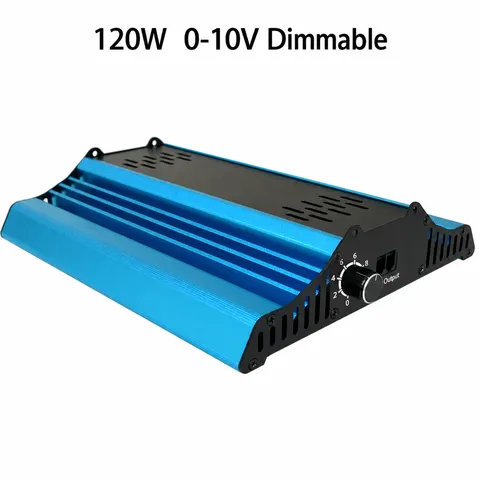
Model BY-ZWLZ-YP-03
Indoor Growing · Grow Tents
View Details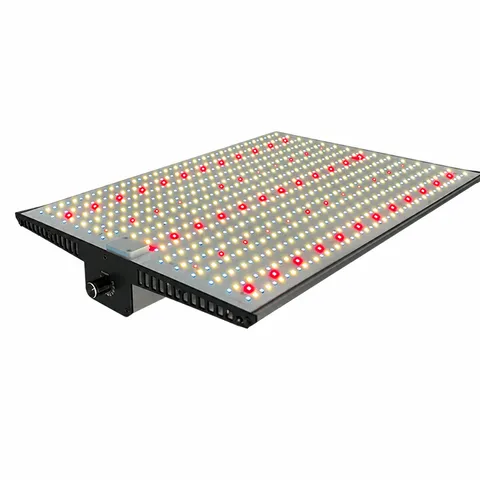
Indoor Growing · Grow Tents
View Details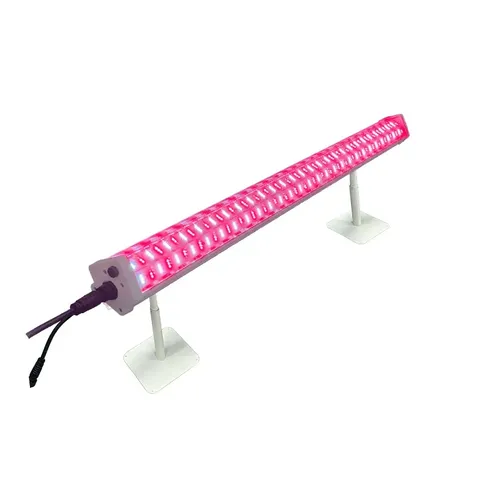
Model AD3T-UC150-13D412-120
Cannabis Cultivation · Indoor Growing
View Details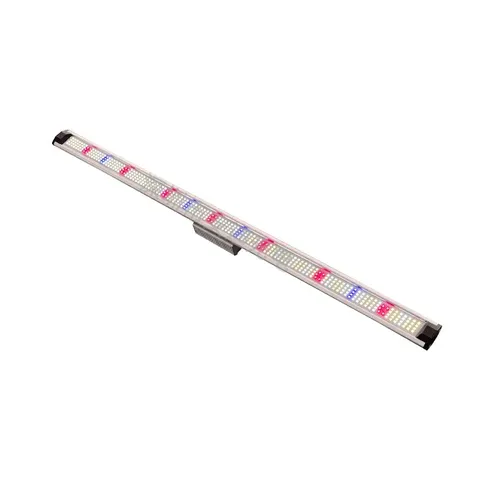
Model AD1-100-1C2-110
Propagation & Seedlings · Vertical Farming
View Details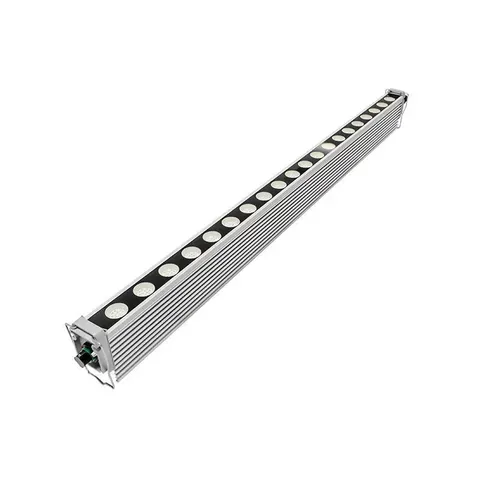
Model JL-XQD24-3
Greenhouse · Commercial Indoor Growing
View Details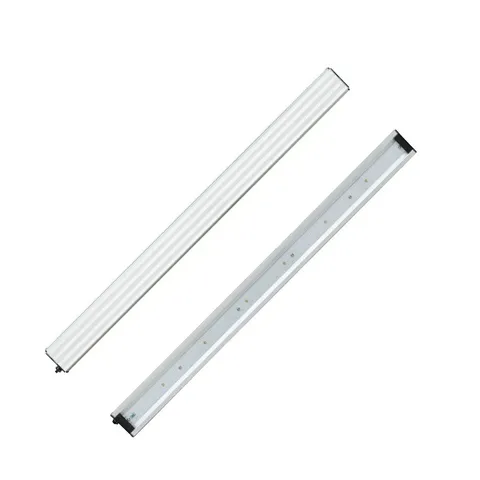
Model ZH-30W
Horticultural Research · Indoor Growing
View DetailsFigures are taken from the published product datasheets. Where a model does not publish PPF or PPE, the value is omitted rather than estimated. PPF is stated in µmol/s, the standard unit for photosynthetic photon flux.
Selection Guide
Choosing the right LED grow light starts with the crop, cultivation environment, target light intensity, canopy area and fixture installation requirements.
Large, high-bay canopies where one fixture has to light a long bed evenly at high output.
Prioritise
Installation: Check ceiling height, hanging hardware and whether the folded frame fits doors and lifts on delivery.
Foldable LED Bar Grow LightsSmaller rooms, grow tents and benches where a compact panel footprint matters more than bar length.
Prioritise
Installation: Plan hanging height against canopy growth, leave airflow around the heat sink, and check driver placement.
Quantum Board Grow LightsGlass or poly greenhouses that must close a winter DLI gap on top of available natural light.
Prioritise
Installation: Allow for truss loading, condensation, sulphur vapour and dimming that links to the climate computer.
Greenhouse Top LightingMulti-tier racks and propagation rooms where the clearance between shelves is the limiting factor.
Prioritise
Installation: Verify shelf spacing, cable routing between tiers and the number of fixtures each controller channel can carry.
Propagation & Rack Grow LightsTall crops where overhead light is intercepted before it reaches the middle and lower canopy.
Prioritise
Installation: Keep fixtures out of the irrigation and spray path, and confirm clip, stand or drop-cable clearance.
Intercanopy & Under Canopy Grow LightsResearch or production programs that need UV, far-red or deep-red added to a base spectrum.
Prioritise
Installation: These fixtures run alongside main lighting, not instead of it; check UV safety procedures for staff.
Supplemental Spectrum Grow LightsAt a Glance
Each fixture family solves a different installation problem. Compare structure and planning constraints before you compare price.
| Grow Light Type | Primary Application | Fixture Design | Key Considerations | View Products |
|---|---|---|---|---|
| Foldable LED Bar | High-bay indoor canopies and large grow rooms | Multi-bar array on a hinged frame that folds flat for shipping and installation | Uniformity across long beds, hanging height, thermal management and dimming protocol — not simply headline wattage. | View |
| Quantum Board | Compact rooms, tents, benches and multi-tier racks | Flat LED panel with the driver mounted on or beside the board | Actual power draw versus stated coverage, heat-sink airflow, and the footprint at your planned hanging height. | View |
| Intercanopy & Under Canopy | Middle and lower canopy of tall crops | Slim linear fixture on clips, stands or drop cables | Beam angle at close range, IP rating for humid zones, mounting hardware and cable routing through the crop. | View |
| Propagation & Rack | Propagation rooms, seedling benches and multi-layer shelving | Low-profile linear bar sized to shelf width, often daisy-chained | PPF per shelf, clearance between tiers, daisy-chain limits and per-tier switching or dimming. | View |
| Greenhouse Top Lighting | Glass and poly greenhouses with natural daylight | High-output top fixture mounted on trusses or suspension cables | The DLI gap to close, distribution against structure and trusses, IP and corrosion rating, climate-computer integration. | View |
| Supplemental Spectrum | Adding UV, far-red or deep-red to a base spectrum | Narrow-band linear tube or bar, run alongside main lighting | Wavelength mix and dose, safety procedures for UV, and scheduling that matches the main photo-period. | View |
Swipe horizontally to see all columns.
Technical Reference
Understand the performance metrics that matter when evaluating commercial LED grow lights.
µmol/s
The total number of photosynthetically active photons a fixture emits per second, measured across 400–700 nm.
Compare fixtures as light sources. PPF describes the fixture, not what reaches the plants.
µmol/J
How many micromoles of PAR a fixture produces for each joule of electricity it consumes.
The number that drives running cost — higher PPE means fewer kWh for the same photons.
µmol/m²/s
The photon flux arriving on one square metre of canopy per second, measured at a specific point and height.
Sets the crop-level target. It changes with distance, so always ask where and at what height it was measured.
mol/m²/day
The total photons a square metre receives over a full day, accumulated from PPFD and photoperiod.
The crop requirement you design to. DLI = PPFD × hours × 0.0036.
Relative % by wavelength
How output is distributed across wavelengths — the PAR range 400–700 nm plus, on some fixtures, far-red at 700–800 nm.
Drives morphology and stretch. Ask for the measured spectrum, not a colour description.
Protocol / range
How output can be reduced or scheduled — knob, 0–10V, PWM, or a controller protocol over daisy-chained fixtures.
Determines whether the fixture can follow a light recipe and shed load at peak tariffs.
V AC, 50/60 Hz
The AC supply range the driver accepts, for example 100–277 V or 220–240 V.
Must match the site. A 100–277 V driver covers both North American and European supplies.
IP + two digits
Ingress protection against dust and water — IP54 for dust-protected and splash-resistant, IP65 for dust-tight and water jets.
Greenhouses, propagation rooms and washdown areas need a higher rating than a sealed grow room.
| Metric | What it describes | Unit | Used for |
|---|---|---|---|
| PPF | Total photon output of the fixture | µmol/s | Comparing fixtures of similar wattage |
| PPE | Photons produced per joule consumed | µmol/J | Estimating energy cost and comparing efficiency |
| PPFD | Photons reaching 1 m² of canopy per second | µmol/m²/s | Checking the delivered intensity at canopy height |
| DLI | Photons accumulated over a full day | mol/m²/day | Matching the crop requirement and photoperiod |
Working through these four numbers step by step? Read PPF vs PPFD vs PPE for the full definitions, formulas and how each one changes a purchasing decision.
Applications
LED Grow Lights for Different Growing Environments — match the fixture family to the way the space is actually operated.
 Illustrative
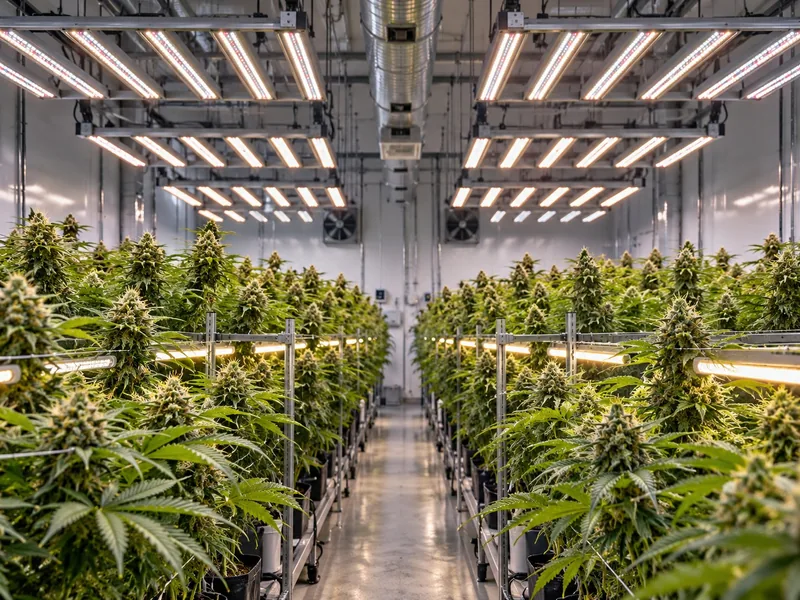
High-output top lighting for flowering rooms, with intercanopy fixtures where canopy depth limits penetration.
Recommended: Foldable LED Bar · Intercanopy
Explore Application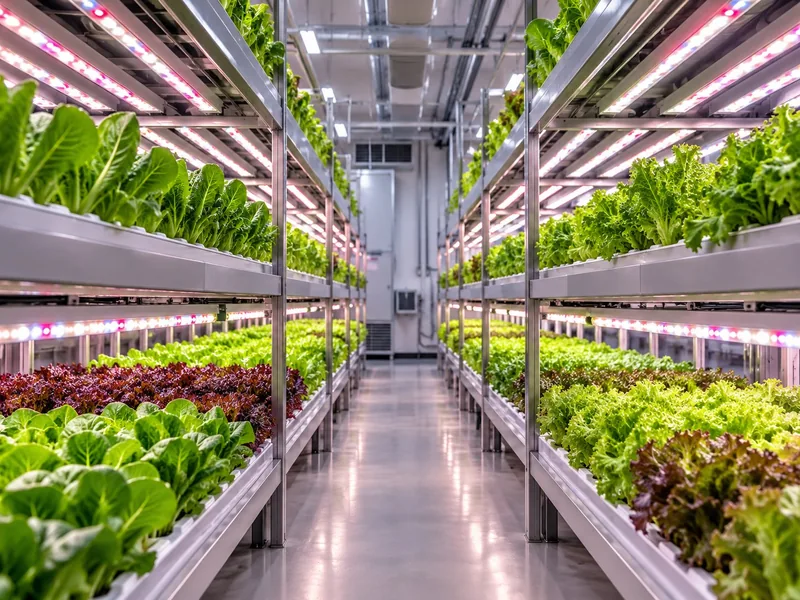 Illustrative
Sealed, high-bay rooms that depend entirely on electric lighting, where efficacy and uniformity set operating cost.
Recommended: Foldable LED Bar · Quantum Board
Explore Application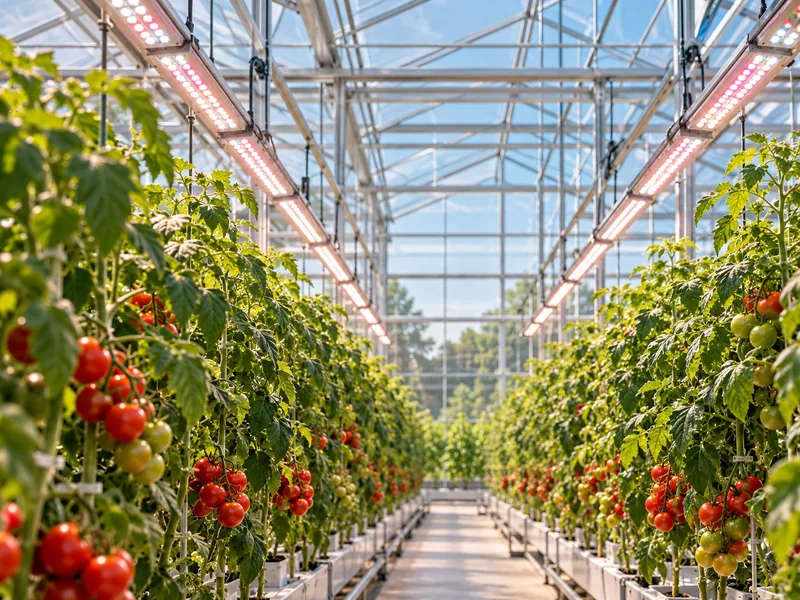 Illustrative
Supplemental top lighting that closes the winter DLI gap and stays reliable in high humidity.
Recommended: Greenhouse Top Lighting
Explore Application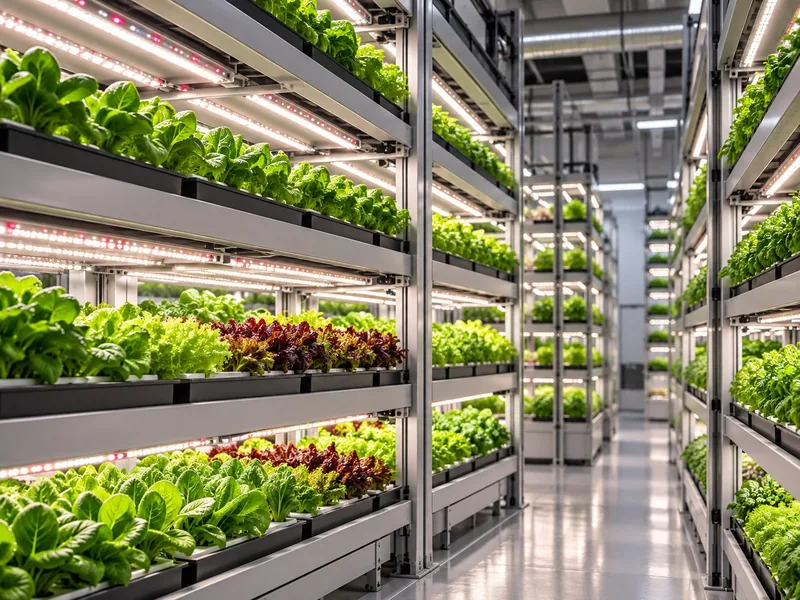 Illustrative
Multi-layer production where low-profile fixtures, clearance and per-tier control decide the layout.
Recommended: Propagation & Rack
Explore Application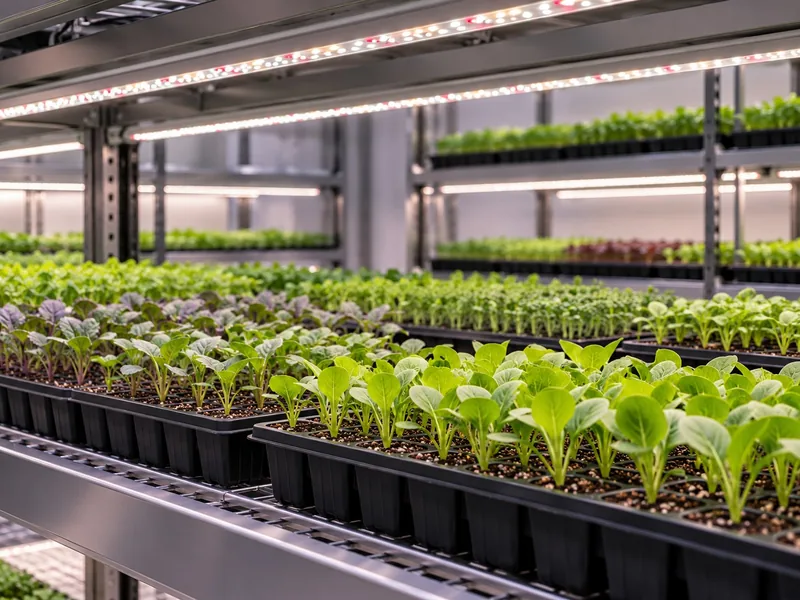 Illustrative
Propagation benches and nursery racks that need even, low-intensity light close to young plants.
Recommended: Propagation & Rack
Explore Application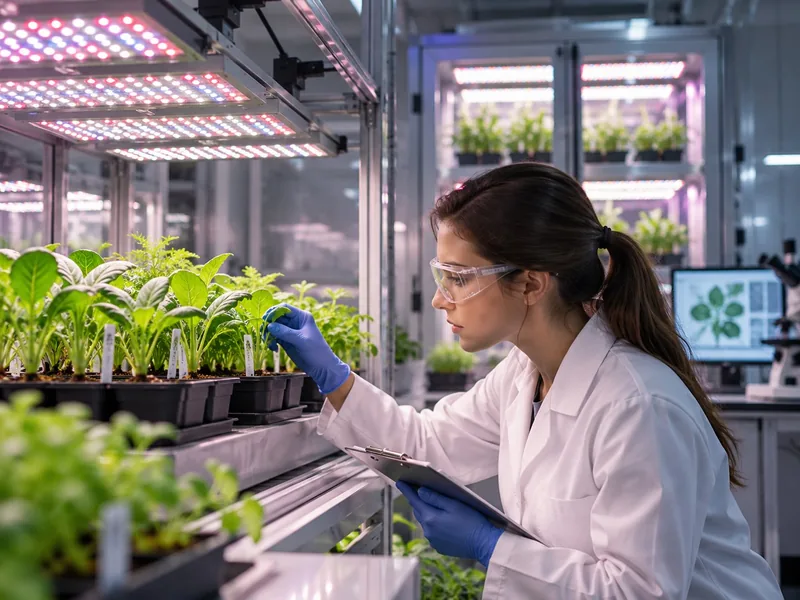 Illustrative
Controlled trials that need documented spectra, adjustable ratios and repeatable settings across chambers.
Recommended: Supplemental Spectrum
Explore ApplicationApplication visuals on this page are illustrative renderings of typical installations, not photographs or documentation of specific customer projects.
Private Label
We support customized grow light specifications and private-label programs for grow light brands, distributors and commercial project buyers.
Wavelength mix and ratios built to your crop recipe
Output options across the same fixture platform
Diode brand and bin selection where the platform allows
Driver brand, rating and electrical configuration
Knob, 0–10V, PWM or controller-based dimming
Housing colour, finish and mechanical details
Laser marking or label placement on fixture and driver
Retail cartons, master cartons and printed inserts
Controller integration and daisy-chain architecture
Available customization depends on the fixture platform, mechanical and thermal design, and order volume. Not every option is available on every model — confirm the exact specification with our team before ordering.
Discuss OEM RequirementsPurchasing
What should B2B buyers check before ordering LED grow lights? Commercial buyers should verify fixture performance data, electrical specifications, certification applicability, product consistency, customization requirements and after-sales support before placing a bulk order.
Define crop, growth stage, canopy area and the PPFD you need at canopy height before comparing fixtures.
Ask for PPF and PPE at the wattage you will operate, plus a distribution map showing uniformity at your hanging height.
Match input voltage, frequency, plug type, circuit loading and power factor to the site — not to the showroom.
Check which marks apply to your market and confirm that the certificate lists the exact model you are buying.
Confirm the dimming protocol, channel count and whether your existing controller or climate computer can drive it.
Agree which customisations are technically available on the platform, and what minimum quantity each one requires.
Ask for a sample build plus test reports, spectrum data, driver datasheets and an installation drawing.
Get warranty length, covered components, spare-driver supply and the claim process in writing before the PO.
Certification scope, lead time, minimum order quantity and warranty terms differ by model and destination market. They are confirmed per project rather than published as blanket commitments on this page.
Technical Library
Longer reads from our technical team on selection, photometry and greenhouse planning.
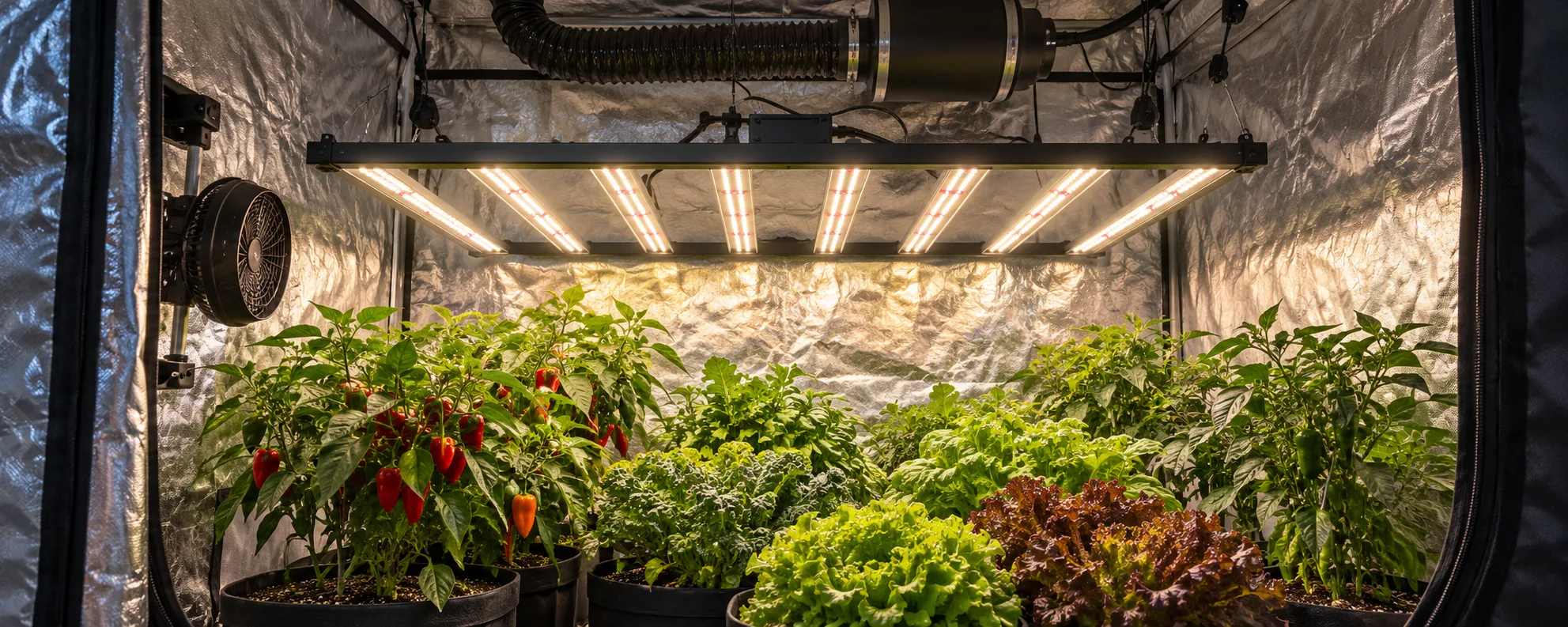
Buying Guide
A commercial buyer’s framework for choosing LED grow lights: match crop PPFD and DLI targets, fixture efficacy (µmol/J), uniformity, spectrum, dimming, IP rating and total cost of ownership.
Read Guide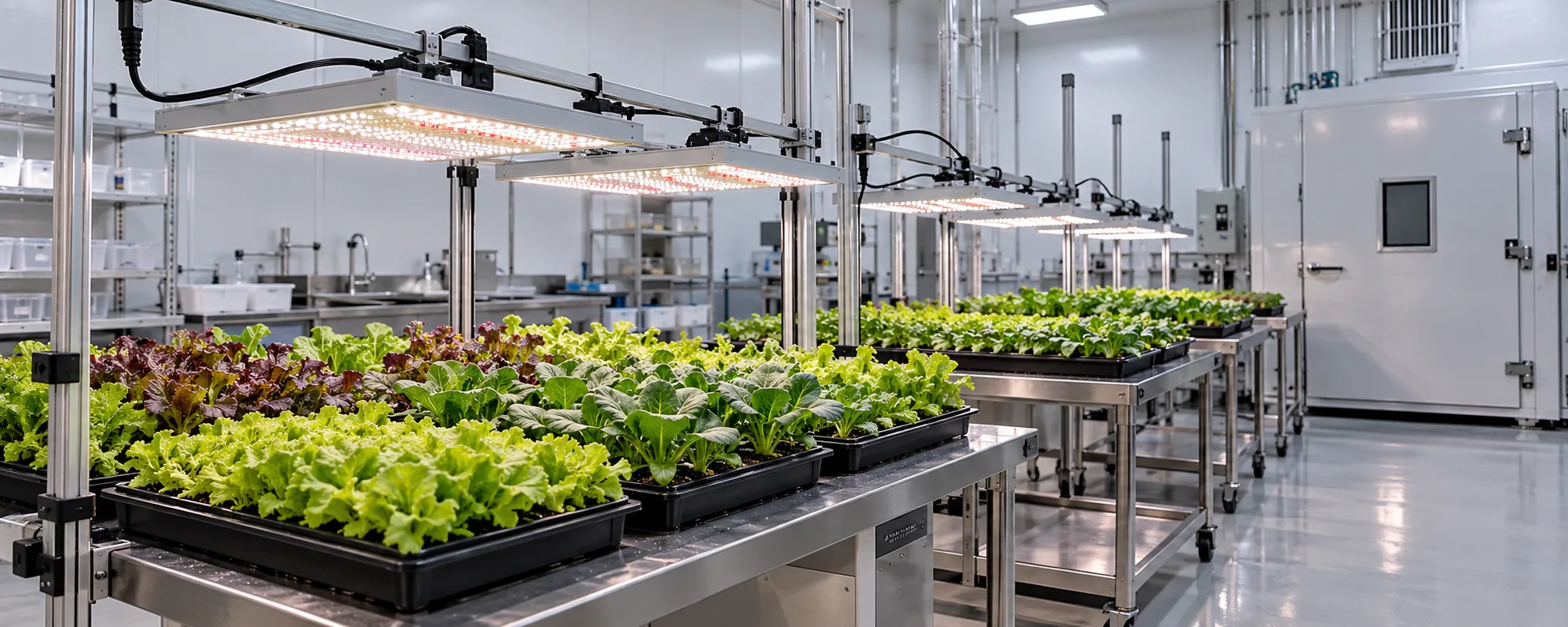
Technology
PPF is total photon output (µmol/s), PPFD is canopy intensity (µmol/m²/s), and PPE is efficacy (µmol/J). Learn the exact units, formulas and how to use each when specifying LED grow lights.
Read Guide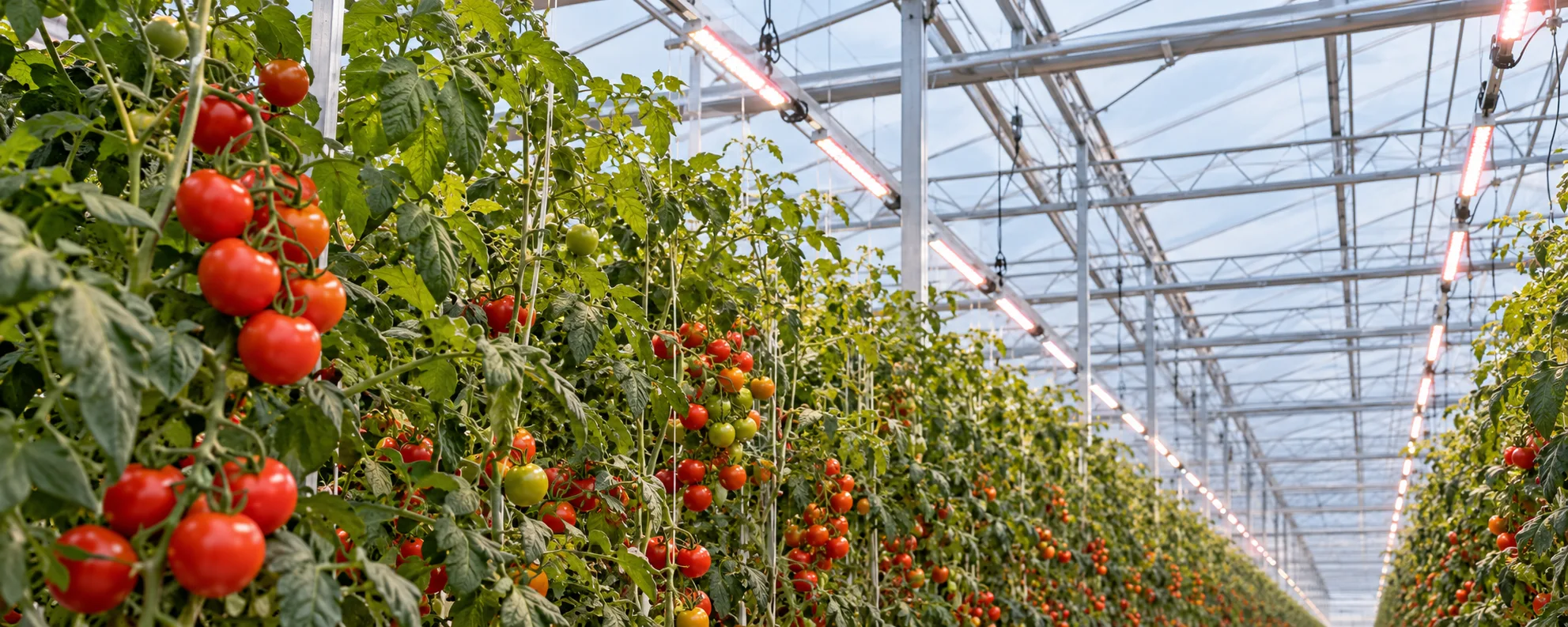
Greenhouse Guide
Plan supplemental LED lighting for a commercial greenhouse — calculate the DLI gap, choose top-lighting vs intercanopy, size fixtures by PPFD and PPE, and integrate dimming with your climate computer.
Read Guide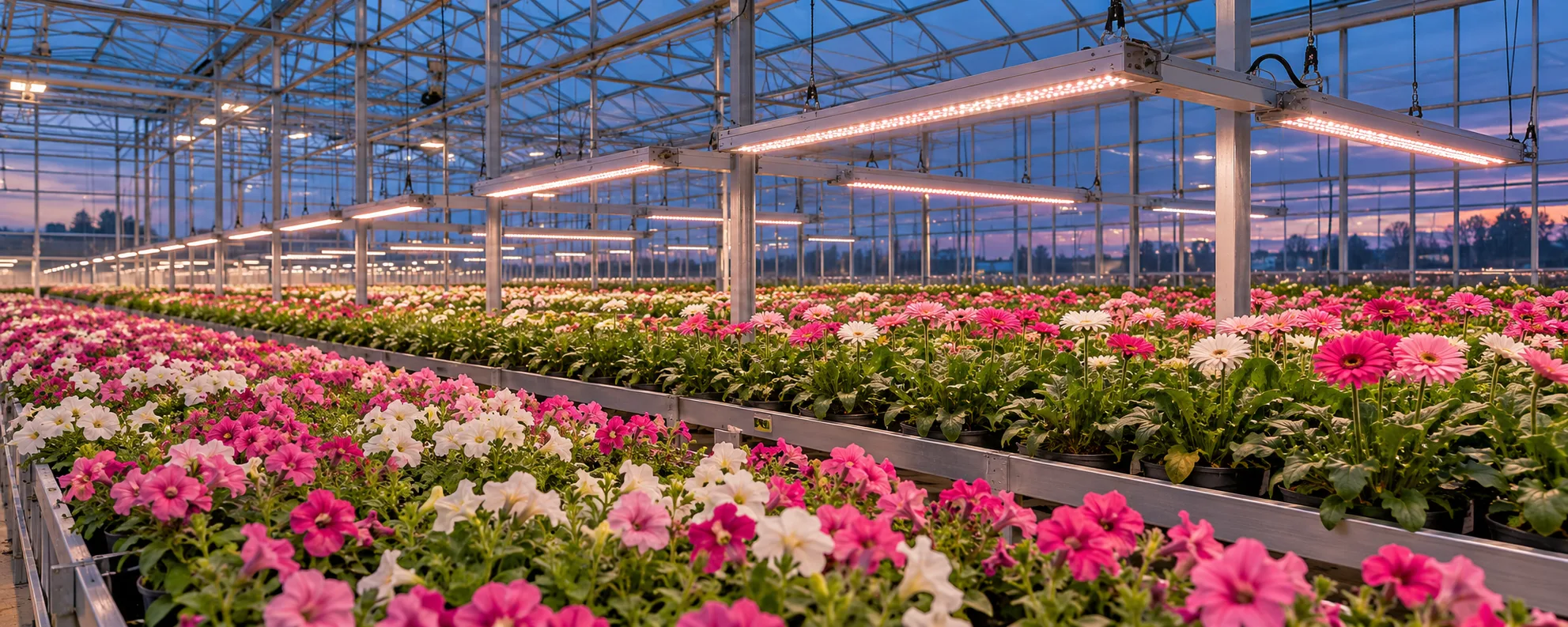
Technology
Full-spectrum fixtures are the default choice for most growers. Multi-channel systems cost more but add spectral control. Which one fits your operation?
Read GuideFAQ
Short answers to the questions that come up most often in fixture selection and bulk purchasing. Longer technical explanations sit in our FAQ Center.
Choosing LED grow lights for a commercial indoor farm starts with the crop, the target PPFD at canopy level and the daily light integral you need to reach.
From there you size fixtures by PPF, compare PPE (µmol/J) at the wattage you will actually run, check uniformity across the canopy, and confirm hanging height, dimming and electrical compatibility before comparing price per fixture.
Bar lights spread many emitters across a long frame so light is distributed over a wide bed, while quantum boards concentrate the same emitters on one flat panel for compact spaces.
Bar fixtures are normally specified for high-bay commercial rooms where uniformity across a large canopy matters. Boards suit tents, small rooms and racks where the available footprint is limited. Both are available in multiple wattages and spectra, so the choice is about geometry and installation rather than one type being inherently better.
PPF is the total photon output of a fixture (µmol/s), PPFD is the photon flux density arriving at the canopy (µmol/m²/s), and PPE is how efficiently the fixture turns electricity into light (µmol/J).
PPF describes the fixture, PPFD describes what the plants actually receive at a specific point and height, and PPE is the figure that drives running cost. DLI then adds time to PPFD: PPFD × hours × 0.0036 = mol/m²/day.
Yes — greenhouse fixtures are specified around natural daylight, structure and humidity rather than total darkness.
Greenhouse top lighting has to add to an existing DLI gap, fit truss spacing and cable heights, and survive condensation, sulphur vapour and washdown, so IP rating and corrosion resistance matter more than in a sealed room. Indoor fixtures carry the entire lighting load instead, which puts PPE and canopy uniformity at high output at the centre of the decision.
Yes — spectrum, wattage, LED chip selection, driver, dimming protocol, housing, logo and packaging can all be customized on the platforms we manufacture.
The exact scope depends on the fixture platform and the order volume: not every option is available on every model, and changes that affect thermal or electrical design normally require a minimum order quantity and a sample approval step.
Verify that the fixtures carry the certification marks your market requires, and that the certificate covers the exact model you are ordering.
Then check voltage and plug compatibility, packaging and transit protection, spare-driver availability, warranty terms in writing, and whether PPF or PPE figures come from a test report rather than a marketing sheet. A pre-shipment sample plus a documented inspection list reduces batch-to-batch surprises.
Compare them on PPE and PPF rather than wattage alone, because wattage describes input power, not delivered light.
Normalise the comparison — same wattage, or same PPFD over the same area — then check whether the higher-output option still fits your electrical supply and cooling capacity. A fixture with better PPE can meet the same PPFD target with fewer units or fewer running hours.
No — intercanopy and under-canopy fixtures supplement overhead lighting; they do not replace it.
Overhead fixtures establish the main PPFD and the overall uniformity of the room, while intercanopy lights add photons to the middle and lower canopy where upper leaves intercept the light from above. They are specified in addition to top lighting, usually at lower wattage and with narrower beam angles.
Send the crop and growth stage, room or house dimensions, planned hanging height, target PPFD or DLI, number of layers or benches, available electrical supply and any certification requirements.
Drawings or photos of the space, the controller or climate-computer setup and your target order quantity let us return a fixture count, layout suggestion and quotation instead of a generic price list.
Send your target specification through the contact form and ask for a sample of the model you are evaluating.
Samples are quoted per unit and can be supplied with the test report and driver documentation for that build. Lead time depends on whether it is a standard build or a customized configuration.
Looking for PPFD, spectrum, installation or certification detail? Browse the full Grow Light FAQ Center.
Tell us your crop, growing area, target PPFD, preferred fixture type and purchasing requirements. Our team can help you evaluate suitable lighting options.